


Ethanolamines (MEA, DEA, TEA): Why No Nines™ Leaves Them Out

Ethanolamines are useful formulation ingredients. They can adjust pH, stabilize emulsions, improve foaming, and help surfactants perform. They are found in personal-care products, cosmetics, household cleaners, detergents, and industrial formulations.
But their chemistry comes with an additional consideration: the potential formation of nitrosamines.
That concern is particularly important for diethanolamine (DEA). DEA is a secondary alkanolamine that can react with nitrosating agents to form N-nitrosodiethanolamine (NDELA), a carcinogenic nitrosamine. NDELA has demonstrated carcinogenicity in experimental animals, is classified by the International Agency for Research on Cancer (IARC) as possibly carcinogenic to humans (Group 2B), and has been listed by California under Proposition 65 as a chemical known to the state to cause cancer since 1988.¹⁻³
Triethanolamine (TEA) does not have the same toxicological profile as DEA, but it can contribute to NDELA formation under certain chemical conditions, and commercial TEA may contain small amounts of DEA as an impurity.⁴⁻⁶
Monoethanolamine (MEA) is chemically different again. It is a primary alkanolamine and should not simply be described as having the same carcinogenicity or NDELA-forming potential as DEA. However, its use still requires controls intended to prevent contamination with secondary amines and interaction with nitrosating systems.¹
For No Nines™, that added chemistry is unnecessary.
We do not need MEA, DEA, or TEA to make our products perform, so we choose formulation systems that do not require managing ethanolamine impurities, nitrosating agents, or potential nitrosamine formation.
The No Nines™ Standard™
Effective chemistry doesn't require unnecessary exposure.
Our ingredient decisions consider not only whether an ingredient can perform a function, but also how much is required, how people are exposed to it, what happens when it is misused, and whether a different chemistry can accomplish the intended purpose with a more favorable exposure profile.
For ethanolamines, the question is not whether these ingredients can perform useful functions. They can.
The question is whether we need them.
We don't.
And when an ingredient family brings additional formulation requirements specifically designed to control carcinogenic nitrosamine formation, we believe avoiding that chemistry altogether is the better choice when suitable alternatives are available.
What Are Ethanolamines?
Monoethanolamine, diethanolamine, and triethanolamine are closely related chemicals made from ammonia and ethylene oxide.
Their names describe the number of ethanol groups attached to the nitrogen atom:
MEA — monoethanolamine is a primary alkanolamine.
DEA — diethanolamine is a secondary alkanolamine.
TEA — triethanolamine is a tertiary alkanolamine.
That structural difference matters because secondary amines such as DEA are particularly susceptible to nitrosation — a chemical reaction that can produce N-nitrosamines.
Ethanolamines and ethanolamine-derived ingredients have historically been used as pH adjusters, emulsifiers, foam stabilizers, surfactants, and processing aids. FDA identifies DEA-related ingredients used in cosmetics including cocamide DEA, lauramide DEA, DEA-cetyl phosphate, oleamide DEA, stearamide MEA, cocamide MEA, TEA-lauryl sulfate, and triethanolamine itself.⁷
The Central Concern: N-Nitrosodiethanolamine
The most important issue surrounding DEA is not simply DEA by itself.
It is what DEA can become.
When DEA encounters an appropriate nitrosating agent, it can form N-nitrosodiethanolamine, or NDELA.⁴
Nitrite is one well-established nitrosating agent, but nitrosation chemistry can be more complicated than simply combining two named ingredients. Formation depends on factors including the chemical environment, pH, temperature, time, impurities, and the presence of other compounds capable of promoting nitrosation.⁴˒⁸
Laboratory research has demonstrated NDELA formation from DEA-containing systems and, under some conditions, from TEA-containing systems. A 2018 study examining cosmetic-relevant chemistry found that NDELA formation varied substantially with pH, temperature, lighting conditions, ethanolamine type, and the presence of sodium nitrite.⁸
This is why nitrosamine control is treated as a formulation issue, not simply an ingredient-list issue.
NDELA Can Penetrate Human Skin
The concern is also relevant to topical products because NDELA is capable of penetrating human skin.
In a 1993 study using human skin and prototype cosmetic formulations, researchers measured dermal penetration of radiolabeled NDELA from sunscreen, shampoo, and other vehicles. Under the finite-dose experimental conditions, total absorption over 48 hours ranged from approximately 35% to 65% of the applied dose, depending on the formulation.⁹
Earlier human and experimental work reviewed by IARC likewise demonstrated that NDELA can be absorbed following dermal exposure.⁴
Those studies do not establish that ordinary use of a particular cosmetic product causes cancer. They establish something more specific and directly relevant to formulation design:
NDELA can be formed under appropriate chemical conditions, and once present, it can cross the skin barrier.
That is a combination No Nines™ chooses to avoid at the formulation level.
What the Cancer Research Shows About DEA
DEA itself has also been studied extensively.
The U.S. National Toxicology Program conducted two-year dermal carcinogenicity studies in rats and mice and published the results in NTP Technical Report 478 in 1999.¹⁰
NTP reported clear evidence of carcinogenic activity in male and female mice, based principally on increased liver tumors in both sexes and kidney tumors in male mice. The same study found no evidence of carcinogenic activity in male or female rats under the experimental conditions.¹⁰
The FDA subsequently reviewed the findings and emphasized that the NTP animal study did not establish a link between DEA exposure and cancer in humans.⁷
IARC later evaluated a broader body of evidence and classified diethanolamine as Group 2B — possibly carcinogenic to humans in IARC Monographs Volume 101.¹¹
So the scientific conclusion should be stated carefully.
DEA has produced carcinogenic effects in laboratory animals under defined exposure conditions. That is not the same as demonstrating that typical consumer exposure causes human cancer. But it is sufficient evidence for major regulatory and scientific bodies to treat DEA exposure as something requiring attention.
California Proposition 65
California's Office of Environmental Health Hazard Assessment lists diethanolamine (CAS 111-42-2) under Proposition 65 as a chemical known to the state to cause cancer. DEA was added to the list effective June 22, 2012.²
NDELA is independently listed.
N-Nitrosodiethanolamine (CAS 1116-54-7) has been listed under Proposition 65 for cancer since January 1, 1988. California established a No Significant Risk Level for NDELA of 0.3 micrograms per day.³
The fact that both the precursor chemistry and the resulting nitrosamine have been evaluated separately is one reason it is important not to treat this simply as a theoretical ingredient interaction.
The European Union Takes a Different Regulatory Approach
European cosmetic regulation makes the distinction among the ethanolamines especially clear.
Under Regulation (EC) No 1223/2009 on cosmetic products, Annex II identifies substances prohibited in cosmetic products.
Entry 411 prohibits:
“Secondary alkyl- and alkanolamines and their salts.” ¹
DEA is a secondary alkanolamine and therefore falls within that prohibition.
MEA and TEA are treated differently.
Monoalkanolamines such as MEA are addressed in Annex III, Entry 61. Trialkanolamines such as TEA are addressed in Entry 62. Rather than banning them outright, the regulation imposes conditions designed specifically to control nitrosamine formation.¹
Among those requirements are:
minimum purity requirements; limits on secondary-amine contamination; a maximum nitrosamine content of 50 µg/kg; storage in nitrite-free containers; and the requirement that the ingredients not be used with nitrosating systems.¹
For trialkanolamines, the regulation additionally limits their concentration in leave-on products.
These restrictions are significant because they show that regulators are not treating nitrosamine formation merely as a hypothetical concern. The chemistry is sufficiently well established that manufacturers using these ingredients must control purity, contamination, storage, formulation partners, and nitrosamine content.
TEA Is Not the Same as DEA
It is important not to overstate the case for triethanolamine.
IARC evaluated TEA in 2000 and placed it in Group 3 — not classifiable as to its carcinogenicity to humans.⁶
TEA is a tertiary amine and does not undergo nitrosation as readily as the secondary amine DEA. NDELA formation from TEA can also be influenced by the presence of DEA as an impurity.
IARC's review noted that technical-grade TEA containing approximately 15% DEA produced substantially more NDELA experimentally than highly purified TEA, reflecting the much faster nitrosation of DEA.⁴
A 2005 experimental study examining TEA and nitrite reported no significant formation of NDELA following dermal administration to mice under the conditions tested, even though NDELA could be produced from TEA under some laboratory conditions.¹²
This distinction matters.
The rationale for excluding TEA is not that TEA has been shown to be equivalent to DEA as a carcinogen.
It is that TEA belongs to a formulation system for which purity, secondary-amine contamination, and nitrosation must be actively controlled — chemistry No Nines™ has chosen not to introduce when we can formulate effectively without it.
MEA Is Different Too
Monoethanolamine should likewise not be grouped indiscriminately with DEA.
MEA is a primary alkanolamine and does not share DEA's direct chemical pathway to NDELA.
Nevertheless, European cosmetic regulations require monoalkanolamines to be at least 99% pure, limit secondary-amine contamination, restrict nitrosamine content, require nitrite-free containers, and prohibit their use with nitrosating systems.¹
That tells us something important about how No Nines™ evaluates an ingredient family.
We do not have to wait until every individual member of a chemical family has identical toxicity data before deciding that its underlying formulation chemistry is unnecessary for our products.
Exposure Matters
DEA itself can penetrate human skin.
A 2004 FDA-affiliated study examined DEA penetration from shampoos, hair dyes, and body lotions using human skin. Systemic penetration into receptor fluid was relatively low under the experimental conditions, but measurable amounts remained within the skin. With repeated lotion applications over 72 hours, approximately 29% of the applied DEA accumulated in the skin, while approximately 1% crossed into the receptor fluid.¹³
Again, this is not evidence that ordinary cosmetic use causes cancer.
It demonstrates that topical exposure is biologically relevant and that the skin is not an absolute barrier to these compounds.
For an ingredient frequently used in products intended for repeated skin contact, that exposure pathway matters when deciding whether the ingredient is necessary in the first place.
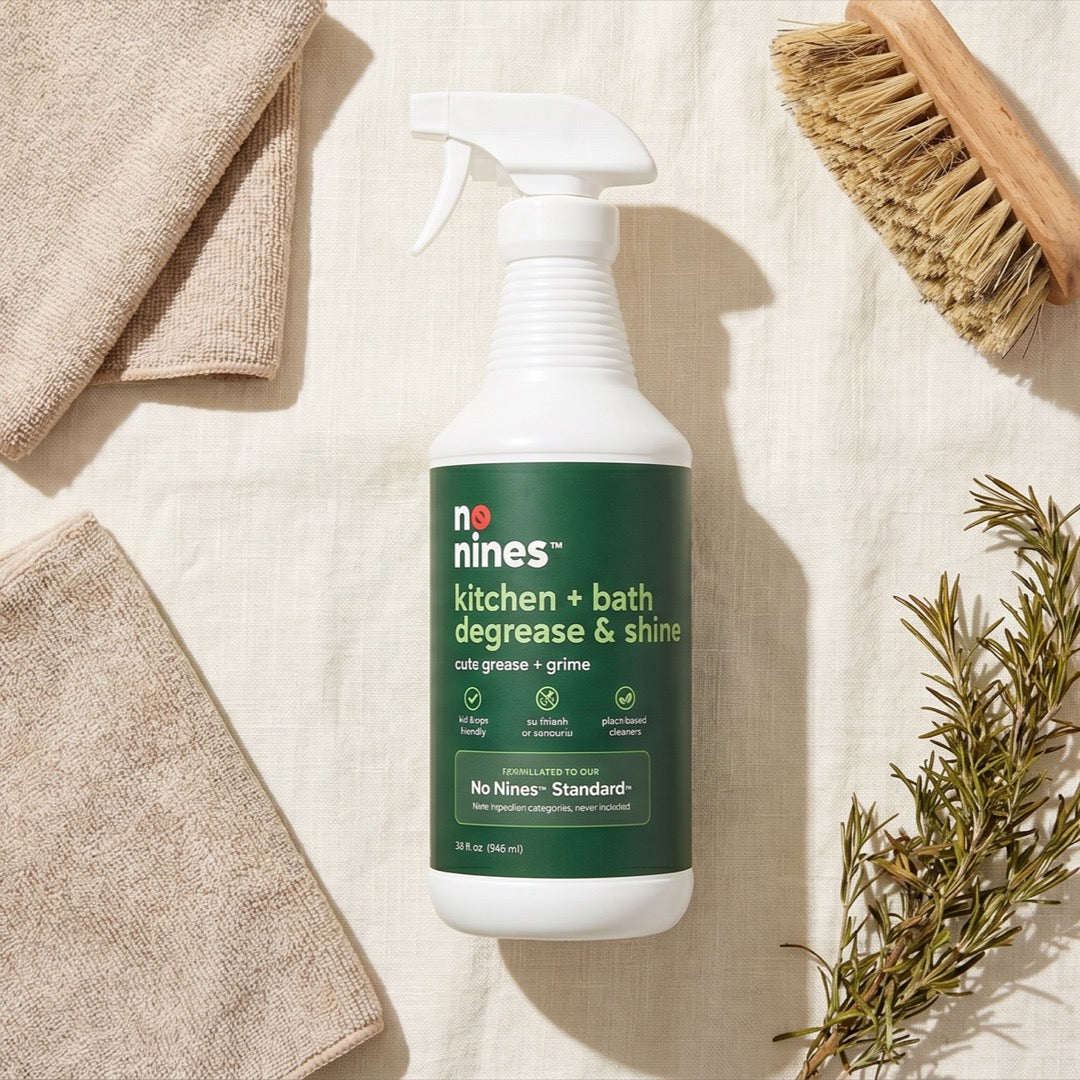
Why No Nines™ Chooses a Simpler Route
Regulators have developed detailed rules for ethanolamine-containing formulations because the underlying chemistry is understood.
DEA is prohibited from EU cosmetics as a secondary alkanolamine.
DEA is listed under California Proposition 65 for cancer.
DEA produced clear carcinogenic activity in mice in a long-term NTP dermal study and has been classified by IARC as possibly carcinogenic to humans.
NDELA can form through nitrosation chemistry involving DEA and, under certain circumstances, TEA-containing systems.
NDELA is itself classified by IARC as possibly carcinogenic to humans, is listed under Proposition 65, and can penetrate human skin.
And even where MEA and TEA remain permitted, European regulations specifically require manufacturers to control secondary-amine impurities, nitrosamines, nitrites, purity, and nitrosating systems.
No Nines™ takes a different approach.
If we don't need the chemistry, we don't introduce the exposure.
MEA, DEA, and TEA are therefore among the ingredient chemistries we choose not to use in No Nines™ formulations.
Published Sources & Further Reading
- European Parliament and Council. Regulation (EC) No 1223/2009 of 30 November 2009 on Cosmetic Products. Official Journal of the European Union. 2009; L342:59–209. See Annex II, Entry 411, “Secondary alkyl- and alkanolamines and their salts,” and Annex III, Entries 60–62 concerning alkanolamines, secondary-amine content, nitrosamines, nitrosating systems, purity, and nitrite-free containers.
- California Office of Environmental Health Hazard Assessment (OEHHA). Diethanolamine. Proposition 65 Chemical Listing. CAS No. 111-42-2. Listed as causing cancer effective June 22, 2012.
- California Office of Environmental Health Hazard Assessment (OEHHA). N-Nitrosodiethanolamine. Proposition 65 Chemical Listing. CAS No. 1116-54-7. Listed as causing cancer effective January 1, 1988. No Significant Risk Level: 0.3 µg/day.
- International Agency for Research on Cancer. N-Nitrosodiethanolamine. In: Some Industrial Chemicals. IARC Monographs on the Evaluation of Carcinogenic Risks to Humans. Volume 77. Lyon, France: IARC; 2000. N-Nitrosodiethanolamine classified Group 2B, possibly carcinogenic to humans.
- European Commission, Scientific Committee on Cosmetic Products and Non-Food Products Intended for Consumers (SCCNFP). Opinion Concerning Dialkyl- and Dialkanolamines and Their Salts in Cosmetic Products. Adopted June 12, 2001. SCCNFP/0375/00.
- International Agency for Research on Cancer. Triethanolamine. In: Some Industrial Chemicals. IARC Monographs on the Evaluation of Carcinogenic Risks to Humans. Volume 77. Lyon, France: IARC; 2000. Triethanolamine classified Group 3, not classifiable as to its carcinogenicity to humans.
- U.S. Food and Drug Administration. Diethanolamine. Center for Food Safety and Applied Nutrition, Office of Cosmetics and Colors. Originally issued December 21, 1999; updated October 27, 2006.
- Lim DS, Lim SK, Kim MK, Kwon YC, Roh TH, Choi SM, Yoon S, Kim HS, Lee BM. Formation and inhibition of N-nitrosodiethanolamine in cosmetics under pH, temperature, and fluorescent, ultraviolet, and visual light. Journal of Toxicology and Environmental Health, Part A. 2018;81(9):241–253. DOI: 10.1080/15287394.2018.1440172. PMID: 29473797.
- Franz TJ, Lehman PA, Franz SF, North-Root H, Demetrulias JL, Kelling CK, Moloney SJ, Gettings SD. Percutaneous penetration of N-nitrosodiethanolamine through human skin (in vitro): comparison of finite and infinite dose applications from cosmetic vehicles. Fundamental and Applied Toxicology. 1993;21(2):213–221. DOI: 10.1006/faat.1993.1091. PMID: 8405784.
- National Toxicology Program. Toxicology and Carcinogenesis Studies of Diethanolamine (CAS No. 111-42-2) in F344/N Rats and B6C3F1 Mice (Dermal Studies). NTP Technical Report 478. NIH Publication No. 99-3968. Research Triangle Park, NC: U.S. Department of Health and Human Services, National Institutes of Health; July 1999.
- International Agency for Research on Cancer. Diethanolamine. In: Some Chemicals Present in Industrial and Consumer Products, Food and Drinking-Water. IARC Monographs on the Evaluation of Carcinogenic Risks to Humans. Volume 101. Lyon, France: IARC; 2013. Diethanolamine classified Group 2B, possibly carcinogenic to humans. PMID: 24772663. ISBN 978-92-832-1324-6.
- Saghir SA, Brzak KA, Markham DA, Bartels MJ, Stott WT. Investigation of the formation of N-nitrosodiethanolamine in B6C3F1 mice following topical administration of triethanolamine. Regulatory Toxicology and Pharmacology. 2005;43(1):10–18. DOI: 10.1016/j.yrtph.2005.04.002. PMID: 15905009.
- Kraeling MEK, Yourick JJ, Bronaugh RL. In vitro human skin penetration of diethanolamine. Food and Chemical Toxicology. 2004;42(10):1553–1561. DOI: 10.1016/j.fct.2004.04.016. PMID: 15304302.